Fushimi-Inari-Taisha

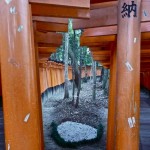
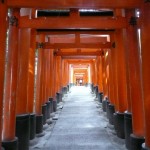
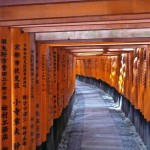
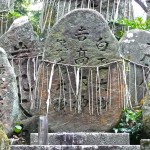
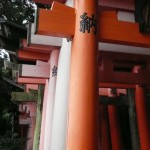
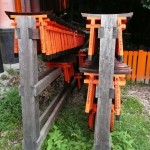
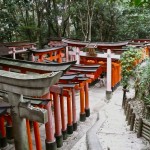
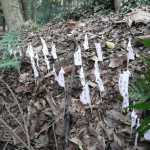
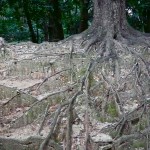
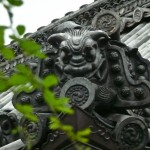
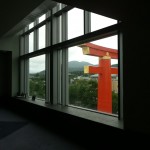
Heading south beyond the Higashyama area of Kyoto this morning I explored the vast shrine at Fushimi-Inari-Taisha, which is spread out across a wooded mountain area to the east of the city. The most extraordinary feature of this huge shrine is the incredible number of  gates (called Torii) which snake through the landscape in numerous directions, forming tunnels through the surrounding trees.

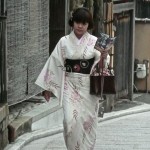
After lunch I stayed on the east side of the Kamo-gama and cycled back north in the direction of central Kyoto into southern Higashiyama to visit Ninen-Zaka and Sannen-Zaka, two delightful streets in a neighbourhood of old wooden houses, restaurants and shops. Although I expected the area to be bustling with tourists, most of them were content to stay in the most popular shopping areas.

Aichi Triennale- Nagoya

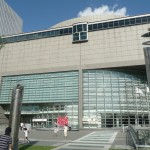
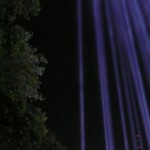
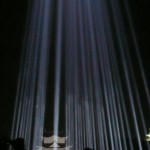
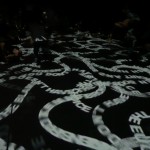
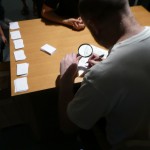
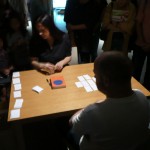
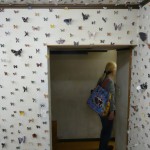
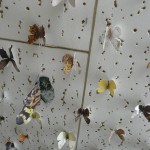
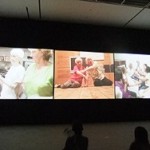
This weekend I visited Nagoya to explore the Aichi Triennale 2010 with Akiko Hada, a Berlin-based artist, who spent some of her childhood in Nagoya. The theme of the Triennale for 2010 is “Arts and Cities”, and the venues for the event are spread across the city on four main sites, although the majority of the works were grouped in the two main city art galleries at the Aichi Arts Center and the Nagoya City Art Museum. There were many site-specific and specially commissioned pieces, and many of the works were installations and/or featured moving images. One of the main highlights of the Triennale was Ryoji Ikeda’s monumental outdoor light and sound installation at Nagoya Castle, but other installations that also impressed me included Tsang Kin Wah’s text-based video installation, They Are Already Old,  Oliver Herring’s witty triple screen video, Huang Shih Chieh’s delicate and playful electronic constructions (see: http://www.youtube.com/watch?v=u5LztEM-5Is), Yang Fudong’s ambitious ten screen 35mm film installation Dawn Mist, Separation Faith and Tim Etchell and Vlatka Horvat’s performance/installation Over the Table.

Ipso Facto at the National Museum of Modern Art

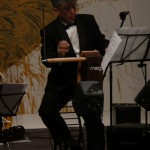
This evening I attended a concert performed by “Ipso Facto”, an ensemble of four musicians featuring Kishin Hunada on the Theremin. An enjoyable and unusual concert, and fascinating to be able to experience the extraordinary and haunting range of sounds the Theremin can produce!

Tsukimi- On the Night of the Autumn Moon

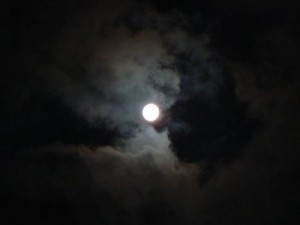
Tsukimi- a celebration of autumn moon, took place on the night of Sept 23rd. This is a fragment of video footage I recorded that evening at the Tsukimi which was held at the Kamigamo Shrine. Click on the highlighted link: Tsukimi, and then on the link that appears next (“? attachment id= 403”) to see the sequence. This may take a minute or two to upload, as although the sequence is short, it was shot in wide screen video.

Autumn Moon

Bright moon,

welcome to my hut –

such as it is

(Kobayashi Issa, 1763 -1828)

The Avant Garde of “Nihonga”

This afternoon I cycled across the river to the Higashiyama area of the Kyoto to the National Museum of Modern Art to see the current exhibition of paintings by the Japanese Avant -Garde group “Rekitei Bijutsu Kyokai”. Founded in the late 1930’s, the painters in this group sought to break with the traditional Japanese painterly subject matter of nature and harmonious landscapes to develop a more “modern” approach, influenced by Western painting- particularly drawing on ideas from Abstract Expressionism, Surrealism and Cubism.

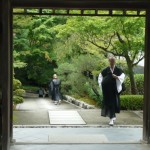
After leaving the museum I cycled further east along the canal to the Nanzen-Ji temple complex.  I spent some time around the pond and in the “Crane and Turtle” garden of Konchi-In and then visited the Kotoku-an sub-temple before climbing up the hills to the secluded  Nanzen-Ji-Oku-No-In shrine.
Back to Kyoto on the Shinkansen

Each time I see Fuji
It appears changed

And I feel I view it

Ever for the first time.

How shall I describe Fuji

To those who have not seen it?

It is never seen twice alike

And I know no one way

Of describing the sight.

Date Masamune (1565-1636), from  Zen and Japanese Culture,  Daisetz T. Suzuki, Princeton University Press, NJ, 1959.

On the way back to Kyoto from Tokyo I finally saw Mount Fuji! I made a little Quick Time movie from the train window with my stills camera, which is posted below. Click on the highlighted text Mt Fuji @ 270 mph and then click on the text that appears subsequently, and it should load in a just a few moments, as I’ve kept it small.

Great Dinner and Good Conversation

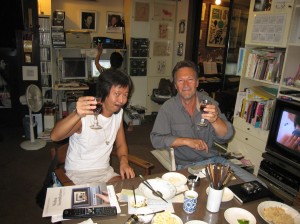
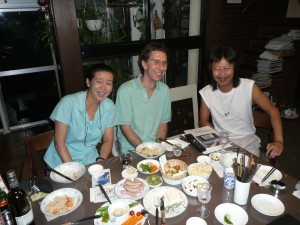
Last night I went to Nankano to meet with Tokyo-based composer and musician Christophe Charles and to the home of video artists  Sei Kazam and Hatsune Ohtsu, who work under their collective name- “Visual Brains”.

Over a wonderful meal provided by Sei and Hatsune, and with the aid of Christophe’s translation skills, I asked them questions about their work and their view of the early Japanese video art scene. Christophe also knows a considerable amount about this too, and has collaborated with Visual Brains on a number of projects.

Sei & Me

Sei Kazam, Hatsune Ohtsu and Christophe Charles

At the Mori Art Museum- Roppongi

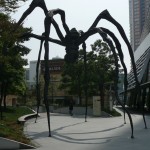
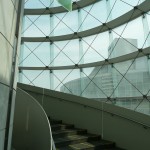
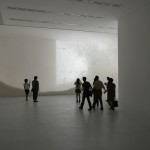
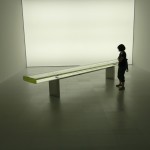
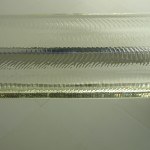
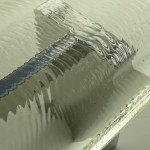
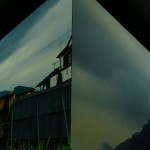
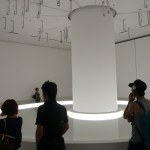
Today I took the Tokyo Subway to Roppongi, and since the National Art Center was closed (a fact I failed to notice in my guidebook), I visited the impressive Mori Art Museum in the Roppongi Hills Complex. I was fortunate to find that there was a particularly interesting exhibition currently on show- Sensing Nature: Rethinking the Japanese Perception of Nature, presenting the work of three excellent artists: Yoshioka Tokujin, Shinoda Taro and Kurbayashi Takashi.

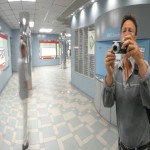
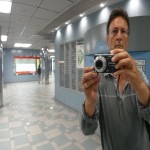
Lost in the Shinjuku JR Station- Self portrait

Tokyo Day & Night

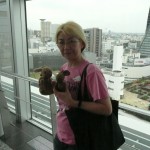
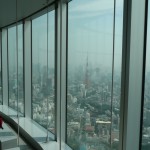
Arrived in Tokyo yesterday later afternoon and found my hotel in the Shinjuku district without much trouble, navigating the Tokyo Metro is easier than it looks- even for someone with my compromised sense of direction! This morning I explored the area near the JR Shinjuku railway station on foot- visiting the observation room in the Tokyo Metropolitan Government Buildings (TMGB) on the 45th floor to get a sense of the Tokyo skyline.

In the evening, I wandered around the same area in search of dinner.

In the afternoon, I met with the critic Hirofumi Sakamoto, who curated a touring exhibition of Japanese Artists’ video for EIA in New York entitled Vital Signals. I  interviewed him through his excellent interpreter about the development of artists’ video in Japan. His comprehensive knowledge of the subject provided me with some important insights into the similarities and differences with the UK  experience during the 1970’s and 80’s.