Sunbeam: A Site-Specific Digital Image Projection, May, 2011
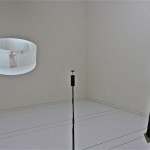
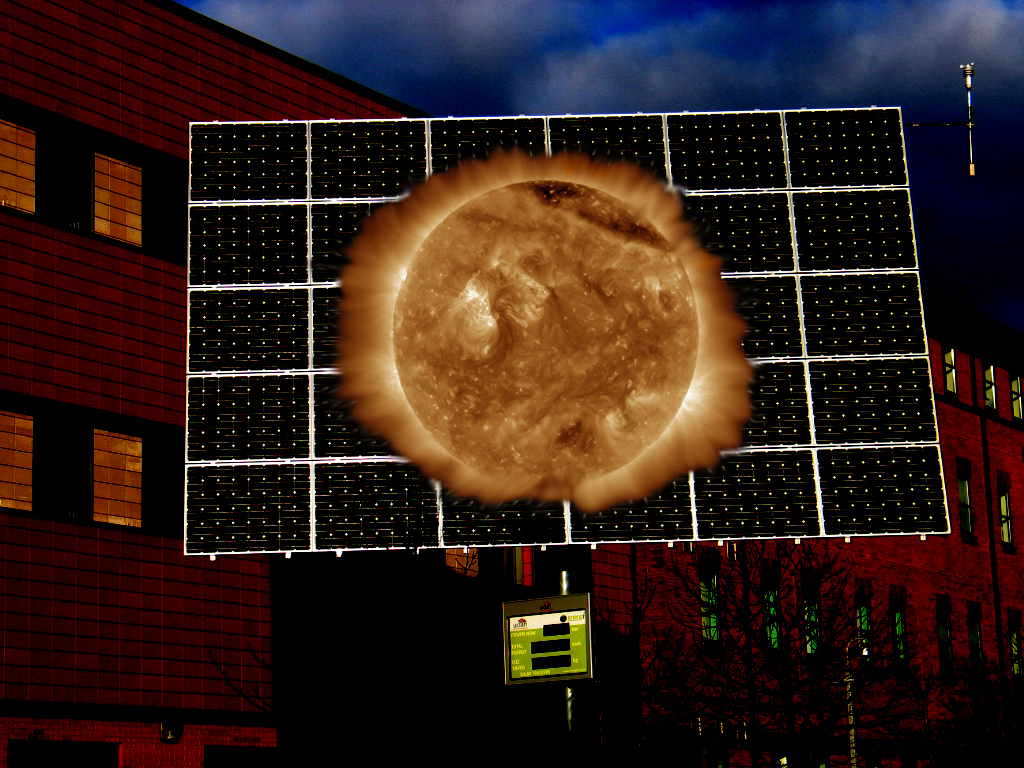
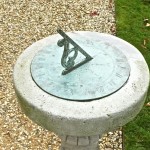
On four consecutive evenings  from May  9th- May 12, 2011, high definition digital images of the sun from NASA’s Solar Dynamics Observatory (SDO) will be projected onto one of the large solar trackers installed at the University of Central Lancashire. The project is produced in collaboration with Dr. Robert Walsh, Reader in Solar Physics at the Jeremiah Horrocks Institute and funded by the Contemporary Arts Development Group, Uclan.   

Sunbeam- A Site-Specific Digital Projection, University of Central Lancashire, May 2011- Preliminary Visualisation

In Darwin’s Garden: Camera Tests at Down House

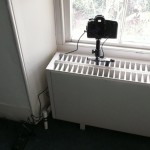
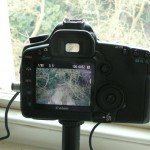
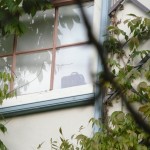
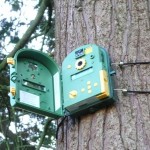
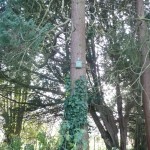
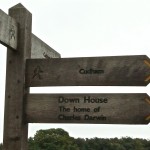
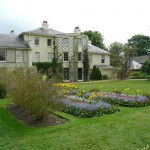
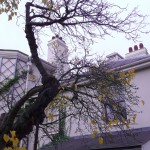
On Friday, Nov 26th I spent the morning at Down house installing two cameras to begin tests at the site. A Canon  EOS 5D , Mk 2  with a Pclix time-lapse device was installed in a window on the 2nd floor of the house overlooking the Mulberry tree, and an outdoor “plantcam” was set up on a tree in the garden. My plan is to make some test images from those two positions to begin exploring the best way to develop the proposed new work.

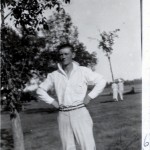
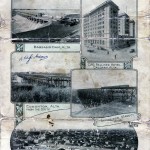
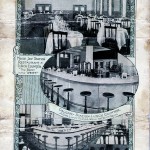
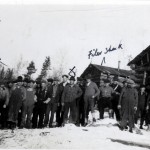
My Grandfather’s Canadian Adventures: 1922-1926

Recently retrieved photos and documents have shed some light on a previously mysterious period in my Grandfather’s early life. After leaving the army he traveled to Canada to find work in 1922 and planned to establish himself there before sending for his wife and young son (my Uncle Jack- now 89!), but after several years rejoined them in England, having been unable to persuade his wife to cross the Atlantic. It seems he spent some of this period based in Calgary, Alberta working on the Canadian Pacific Railway, and then several years in Kenora, Ontario working for the Keewatin Lumber Company, before returning home to Colchester.

Darwin’s Garden

On Monday, Oct 18th I visited Down House to discuss my on-going project to produce a time-lapse web-based installation at Charles Darwin’s former home in rural Kent. I met with Rowan Blaik, head gardener at Down House to discuss the next phase of the project. We have agreed that I will install some cameras to produce test sequences in my preferred locations to produce time-lapse sequences of the ancient mulberry tree at the rear of the house.

The National Art Center and Meeting Itsuo Sakane

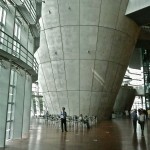
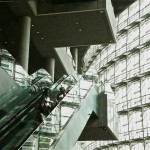
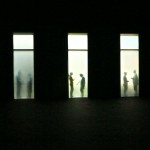
It’s my last day in Japan and after breakfast at my hotel I took the subway to Roppongi to visit the National Art Center- an imposing and spacious building designed by Kisho Kurokawa. I viewed an exhibition entitled Shadows, which featured works from the collections of the Japanese national museums by Japanese, European and American artists working in a variety of media-but predominantly photography and painting. I was familiar with most of the Western artists represented, but there were a number of Japanese artists whom I did not know, including Miho Akioka and Jiro Takamatsu. I was also happy to see Krzysztof Wodiczko’s four-channel video projection installation If You See Something… which I first saw at the Venice Biennale several years ago.

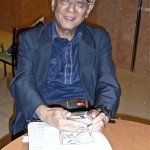
After lunch I met and interviewed Itsuo Sakane, pioneering electronic media writer, curator and educator, who has been deeply engaged in ideas about the relationship between technology and art and actively involved in the media art scene both in Japan and internationally since the late 1960’s and has been instrumental in bringing it to the attention of a wider public.

A Visit to the ICC and meeting with Michael Goldberg

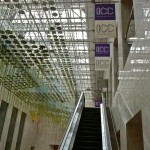
This morning I visited NTT’s InterCommunication Center (ICC) in Shinjuku to see the exhibition Open Space 2010, which featured a number of stunning new works by Japanese media artists. I was particularly impressed by The Tenth Sentiment, a beautiful and engaging  (although unfortunately unphotographable!) installation by Ryota Kuwakubo,  Morel’s Panorama, by Masaki Fujihata and a circular structure for the internal observer by Norimichi Hirakawa.

After lunch I met with and interviewed video pioneer, animateur and artist Michael Goldberg, who is considered by many in Japan to be the “father” of Japanese video art.

Presentation at the National Film Center, National Museum of Modern Art, Tokyo.

Yesterday afternoon I made a presentation about my early videotape and installation work to artists and art students at the National Film Center, with the help of Tokyo-based video artist Masayuki Kawai, who kindly provided an excellent live translation. After the presentation, I was able to meet a number of other video artists based in Tokyo including Kentaro Taki, Ryoji Shibata, Ota Yo, Tetsuro Hatano and Kunitoshi Okuno.

Last Night in Kyoto and on the Shinkansen to Tokyo

After a day at Kyoto Seika looking at video work in the University’s Media Center Collection, that evening I had dinner with Prof Ina and Kyoto-based media artists Akiko Takahashi and Chie Hirano. The following morning Shinsuke and I took the train to Tokyo, working on the the book translation en route.

Media Center at Kyoto Seika

My morning session viewing work at the media center at Kyoto Seika was enjoyable and fruitful, and I was able to see a number of works by Japanese moving image artists relevant to my research. The highlights of the morning viewing include two pieces by Takahiko Iimura- Ayers Rock (1985) and Ma: Space-Time in the Garden of Ryoan-Ji (1989), Visual Brains’ witty De-Sign 2 and a number of impressive works by Takashi Ito from two compilations of work from the 1980’s and 1990’s Illumination Ghost. The second compilation tape included an impressive and darkly disturbing work entitled  Zone (1996).

On my way home from the university this afternoon, I stopped to take a few more images, as tomorrow I leave for Tokyo, and Saturday I fly home to London.